
Website Audit
A website audit is a comprehensive analysis of a website’s overall performance, structure, and SEO health. Its purpose is to identify technical issues, content gaps, and optimization opportunities that may be preventing the site from ranking well on search engines or providing a good user experience.
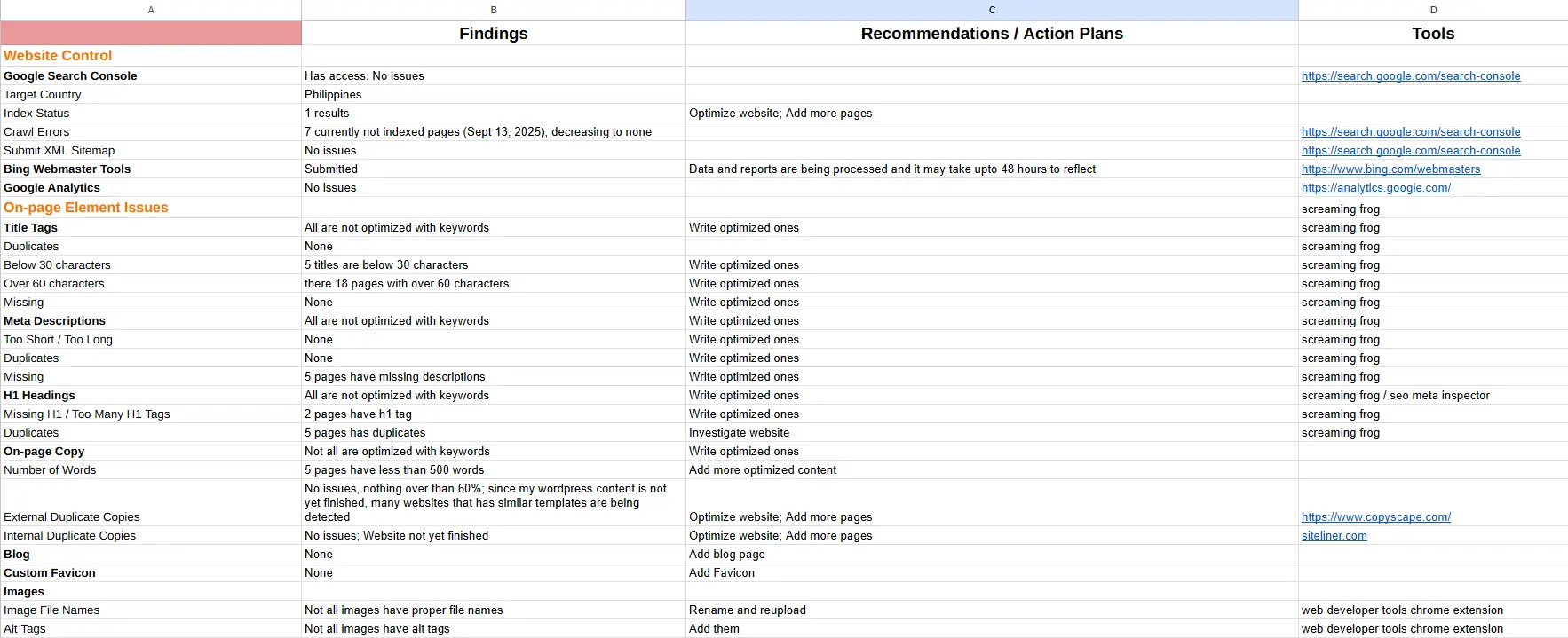
Key Areas Covered in a Website Audit
1. Technical SEO Audit
Checks for site speed, mobile-friendliness, crawl errors, and indexing issues.
Reviews XML sitemaps, robots.txt, canonical tags, and HTTPS security.
Identifies broken links, duplicate pages, and redirect problems.
2. On-Page SEO Audit
Analyzes titles, meta descriptions, header tags, alt texts, and keyword usage.
Reviews content quality, internal linking, and proper use of structured data.
Ensures pages are optimized for relevant search intent.
3. Off-Page SEO Audit
Evaluates the backlink profile (quality, quantity, and relevance of links).
Identifies toxic or spammy backlinks that could harm rankings.
Assesses brand mentions and overall domain authority.
4. Content Audit
Reviews existing content for relevance, engagement, and keyword alignment.
Detects thin, outdated, or duplicate content.
Suggests improvements or new content opportunities to strengthen authority.
5. UX (User Experience) & Design Audit
Tests navigation, layout, and mobile responsiveness.
Measures page loading speed and user flow.
Ensures design consistency and accessibility.
6. Analytics & Performance Audit
Uses tools like Google Analytics, Search Console, and PageSpeed Insights.
Measures bounce rate, session duration, traffic sources, and conversion paths.
Why It’s Important?
Identifies technical errors that affect search rankings.
Improves website speed and user experience.
Helps prioritize SEO tasks and content improvements.
Boosts visibility, engagement, and conversions.
Provides a roadmap for long-term SEO growth.
Tools Commonly Used
Google Search Console & Analytics
Ahrefs / SEMrush / Moz / Screaming Frog
GTmetrix / PageSpeed Insights / Sitebulb